
PHONE / WHATSAPP / WECHAT
ADDRESS
South Of Wensheng Street, West Of Xingan Road, Weifang, Shandong, China

Weifang Haizhiyuan Chemical is deeply engaged in the inorganic salt chemical industry, with four core products: calcium chloride, magnesium chloride, soda ash and sodium bicarbonate. We have long taken sustainable development as the underlying logic of corporate growth, benchmarked advanced industrial green manufacturing standards, and focused on four dimensions: environmental protection, technological innovation, safety management and social responsibility. We have built a full-life-cycle green system covering raw material extraction, production and processing, product application and end-of-life recycling. Through low-carbon circular processes, standardized safety control, independent technological upgrading and comprehensive social responsibility implementation, we have blazed a high-quality sustainable development path tailored to the saline-alkali chemical sector.
Build a Closed-Loop Circular System and Advance Low-Carbon Green Production
Upholding the principle of green production centered on resource recovery, energy conservation, emission reduction and clean manufacturing, the company has built an integrated circular industrial chain for calcium chloride, magnesium chloride, soda ash and sodium bicarbonate. We keep cutting the carbon footprint of the whole process and push forward the construction of waste-free factories.
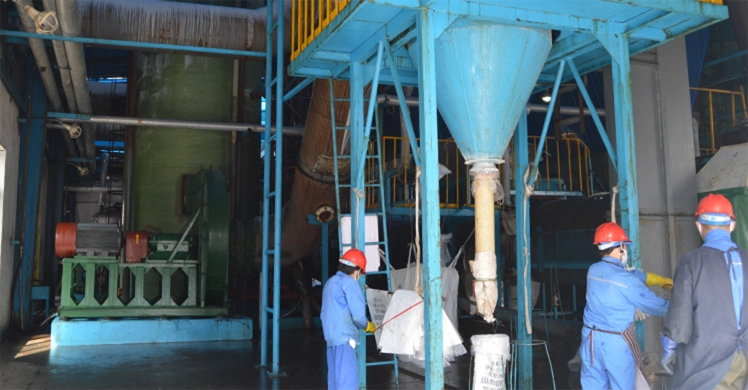
Internal Material Circulation for Efficient By-Product Utilization Relying on the collaborative co-production process of soda ash, calcium and magnesium, all carbon dioxide released during soda ash production is recovered as the core raw material for the carbonization procedure of sodium bicarbonate. Calcium and magnesium-containing mother liquor generated from the refining section of calcium chloride and magnesium chloride flows back to the upstream brine purification process. A small amount of by-product hydrochloric acid from production is used for impurity removal in magnesium chloride refining. Two-way circular chains are formed: Soda Ash — CO₂ — Sodium Bicarbonate, and Brine — Calcium & Magnesium Salts — Refined Mother Liquor. The comprehensive material utilization rate exceeds 99.5%, sharply cutting consumption of outsourced raw materials and greenhouse gas emissions.
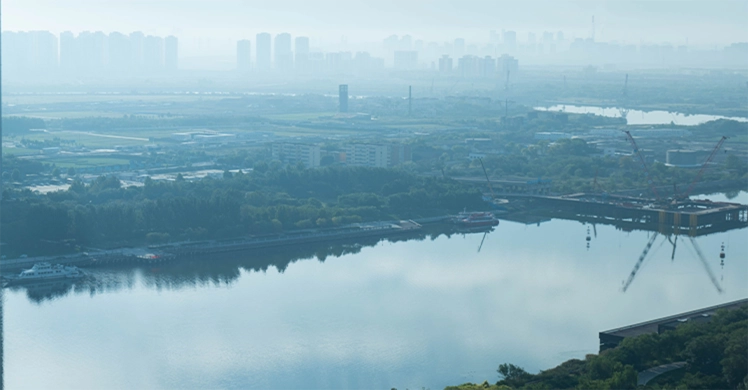
Cascade Reuse of Water Resources with Near-Zero Wastewater Discharge All production lines are equipped with a combined water treatment system integrating MVR evaporation, membrane filtration and neutralization precipitation. Condensed water from calcium chloride and magnesium chloride evaporation is recovered for raw brine dilution and equipment cleaning. Washing wastewater from soda ash and sodium bicarbonate undergoes advanced desalination treatment before being reused for factory greening and circulating cooling water. The reuse rate of production water stands above 92%, eliminating risks of direct discharge of high-salinity wastewater. Water quality indicators are strictly controlled in line with the Emission Standards of Pollutants for Inorganic Salt Industry.
Comprehensive Treatment of Three Wastes to Cut Pollution and Carbon at the Source For waste gas, bag dust collectors and spray desulfurization devices are deployed; collected production dust is directly recycled back to production lines. For solid waste, calcium-magnesium slag from brine purification is processed into auxiliary building materials to realize solid waste resource recovery. On the thermal energy front, waste heat from drying and evaporation sections is recycled to preheat incoming brine, lowering coal combustion in boilers and continuously reducing carbon emissions per unit product. In addition, all four products fit low-carbon application scenarios: calcium chloride and magnesium chloride serve as road deicers and industrial cooling agents to replace highly polluting antifreeze materials. Food-grade soda ash and sodium bicarbonate act as natural residue-free food additives, empowering the low-carbon transformation of downstream industries with eco-friendly products.
Iterate Independent Processes to Form an Efficient Low-Carbon Product Portfolio
Taking technological innovation as the core driving force of sustainable development, the company keeps increasing R&D investment to build an automated and refined production system. We optimize the performance of calcium chloride, magnesium chloride, soda ash and sodium bicarbonate, expand green application scenarios and break the high energy consumption bottleneck of traditional saline-alkali chemical manufacturing.
Self-improved coupled low-temperature crystallization and multi-effect evaporation processes are adopted for calcium chloride and magnesium chloride production, cutting energy consumption by 19% compared with traditional high-temperature evaporation techniques. Low-carbon wet decomposition soda ash technology is matched with pulse back-flushing anti-clogging pipelines to boost brine resource recovery. Sodium bicarbonate adopts low-temperature carbonization synthesis to cut energy loss from high-temperature calcination. The full set of processes has been honored as a regional clean production demonstration technology. Meanwhile, a DCS intelligent central control system is deployed to realize full-process digital regulation of the four product lines, precisely controlling temperature, concentration and material ratio to eliminate invalid energy loss.
Our in-house R&D laboratory iterates product specifications to launch high-purity food-grade and pharmaceutical-grade calcium chloride, magnesium chloride, light soda ash and edible sodium bicarbonate. These products are widely applied in eco-friendly sectors including food processing, new energy battery thermal insulation, feed additives and water purification. High-purity anhydrous calcium chloride functions as a recyclable eco-desiccant; magnesium chloride is used for ecological dust suppression and soil improvement; soda ash and sodium bicarbonate are applied to industrial flue gas desulfurization. Functional green products fuel the sustainable upgrading of downstream industries.
Following the industrial cluster development concept and leveraging Weifang’s local brine resource advantages, we have built an integrated production base covering brine — calcium & magnesium salts — soda ash — sodium bicarbonate, reducing carbon emissions generated by long-distance raw material transportation. We also develop compound eco-additives by blending the four products into deicers and water treatment agents to raise product added value and drive the saline-alkali chemical industry toward high-end and low-carbon transformation.
Full-Process Standardized Control to Consolidate the Bottom Line of Sustainable Development
Sustainable chemical manufacturing cannot exist without a robust safety system. The company has established a full-chain safety management mechanism covering the production, warehousing, transportation and sales of calcium chloride, magnesium chloride, soda ash and sodium bicarbonate. Standardized control mitigates production risks and guarantees stable long-term operation of personnel, equipment and the environment.
Production lines are arranged in zones according to the physicochemical properties of the four products. Leak-proof cofferdams and emergency neutralization tanks are installed in moisture-proof and anti-corrosion sections for calcium chloride and magnesium chloride. Explosion-proof dust removal and ventilation dust suppression equipment are equipped for dust-generating sections of soda ash and sodium bicarbonate. Preventive equipment maintenance is conducted regularly, and a digital monitoring system tracks pressure, temperature and material liquid levels in real time to forestall safety hazards such as pipeline corrosion and material leakage.
Complete product traceability ledgers are established. Industrial-grade and food-grade products are stored separately and transported by dedicated vehicles. Standardized loading, unloading and packaging specifications are formulated targeting the deliquescence of calcium chloride & magnesium chloride and alkaline corrosiveness of soda ash. Food-grade products adopt nitrogen-filled vacuum packaging to preserve product quality and avoid environmental pollution caused by material leakage during transit. A fully stocked emergency material warehouse is equipped, and regular drills for leakage, fire and wastewater overflow are held to enhance risk response capacity.
We implement the management philosophy of "Safety First". Specialized training covering process safety, hazardous chemical operation and environmental emergency response is held regularly for all frontline production, warehousing and sales staff. A safety performance appraisal mechanism encourages employees to proactively identify production hazards. A company-wide safety culture ensures long-term stable, compliant and green operation of all four production lines.
Stay True to Corporate Original Aspiration to Achieve Coordinated Coexistence of Economy, Society and Environment
Weifang Haizhiyuan Chemical strictly abides by laws and regulations, balances corporate development, employee rights, regional growth and ecological protection, and fulfills social responsibility through tangible actions. We build a sustainable development ecosystem together with customers, employees and local communities.
Safeguard Employee Rights and Promote Balanced Talent Development Adhering to the philosophy of "Joint Growth of Enterprise and Employees", we improve salary, welfare and labor protection systems, supplying complete protective gear for frontline operators, R&D technicians and maintenance staff. Skill upgrading training channels are built to cultivate core saline-alkali chemical technicians. We employ local labor to guarantee fair labor and support stable regional employment and balanced talent development.
Compliant Operation Boosts Regional Green Low-Carbon Transformation We fully comply with environmental and work safety laws, voluntarily complete pollutant discharge permits and clean production audits, and continuously invest in environmental technological transformation in line with local policies for replacing old growth drivers with new ones. Relying on our four eco-friendly products, we supply low-cost low-carbon raw materials for local water treatment, building material, food and new energy enterprises, driving synchronous green upgrading of upstream and downstream industrial chains and lifting the overall development level of the regional inorganic salt industry.
Engage in Public Welfare and Popularize Low-Carbon Concepts to Spread Sustainable Ideas We actively participate in regional environmental public welfare and rural support initiatives, and share low-carbon application solutions of calcium chloride, magnesium chloride, soda ash and sodium bicarbonate with downstream clients. Our green production lines are open to visitors to promote the circular chemical production model. We keep upgrading factory greening and rainwater collection facilities to build a garden-style eco-factory, conveying the green transformation vision of the chemical industry to society through our corporate practices. Meanwhile, the industrialized projects deliver steady economic benefits, boost local tax revenue and generate outstanding economic and social value.
Rooted in Weifang’s local brine resource advantages, Weifang Haizhiyuan Chemical takes four core products — calcium chloride, magnesium chloride, soda ash and sodium bicarbonate — as carriers. We take environmental protection as the foundation, technological innovation as the engine, safety management as the bottom line and social responsibility as the core connotation, fully implementing a sustainable development path featuring circular economy, low-carbon manufacturing, compliant operation and win-win progress. In the future, the company will further deepen R&D in green saline-alkali chemical manufacturing, continuously optimize full-industry-chain low-carbon processes, enrich the supply of eco-friendly products, and create long-term value for customers, employees, society and the ecological environment through a long-acting sustainable development model, facilitating the green and high-quality development of the chemical industry.
PHONE / WHATSAPP / WECHAT
ADDRESS
South Of Wensheng Street, West Of Xingan Road, Weifang, Shandong, China
Copyright © 2026 by Weifang Haizhiyuan Chemistry And Industry Co., Ltd. All Rights Reserved